

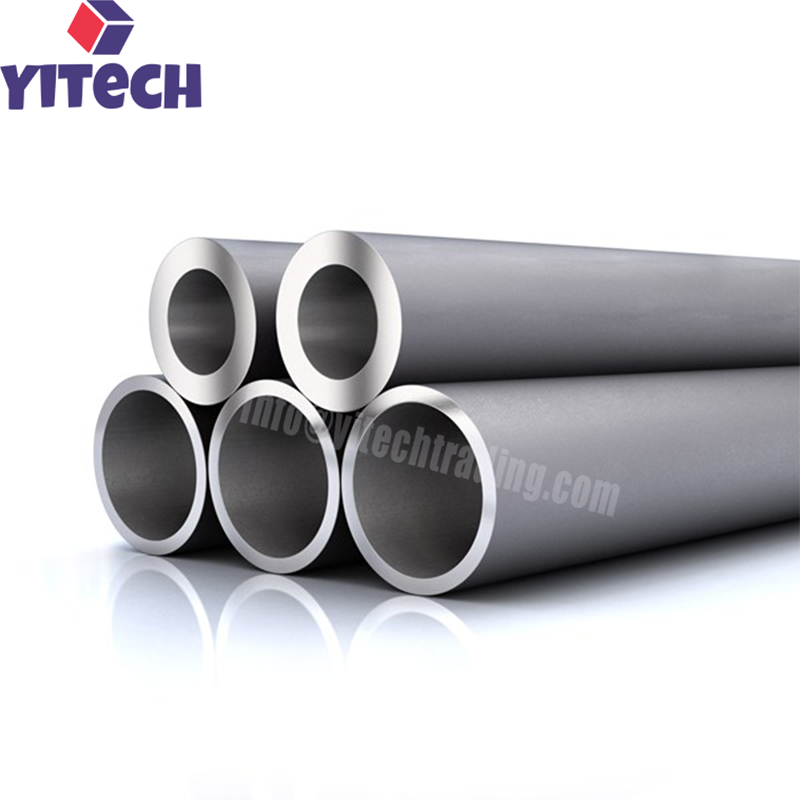
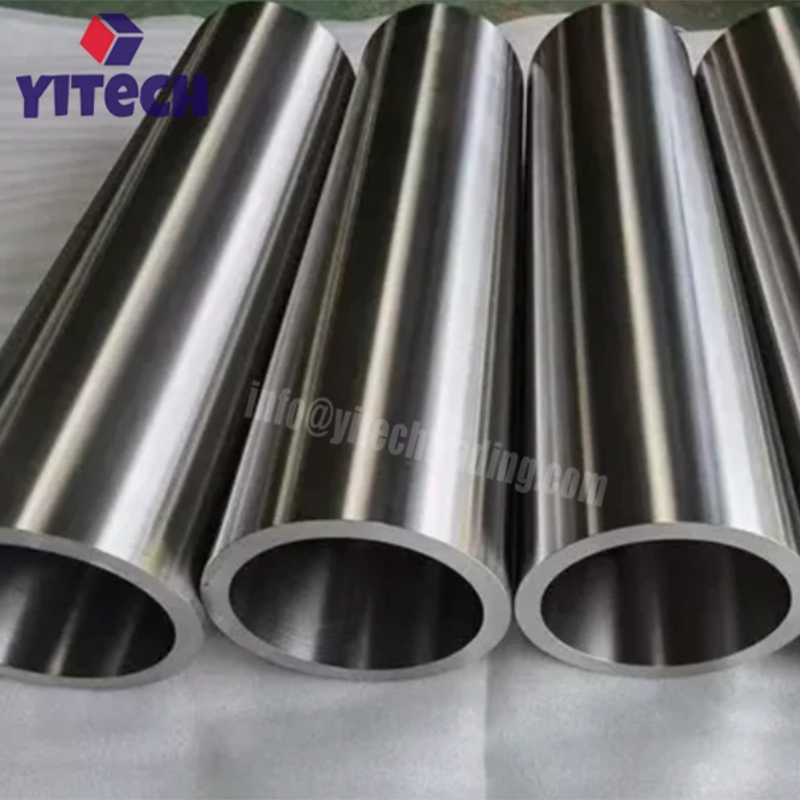
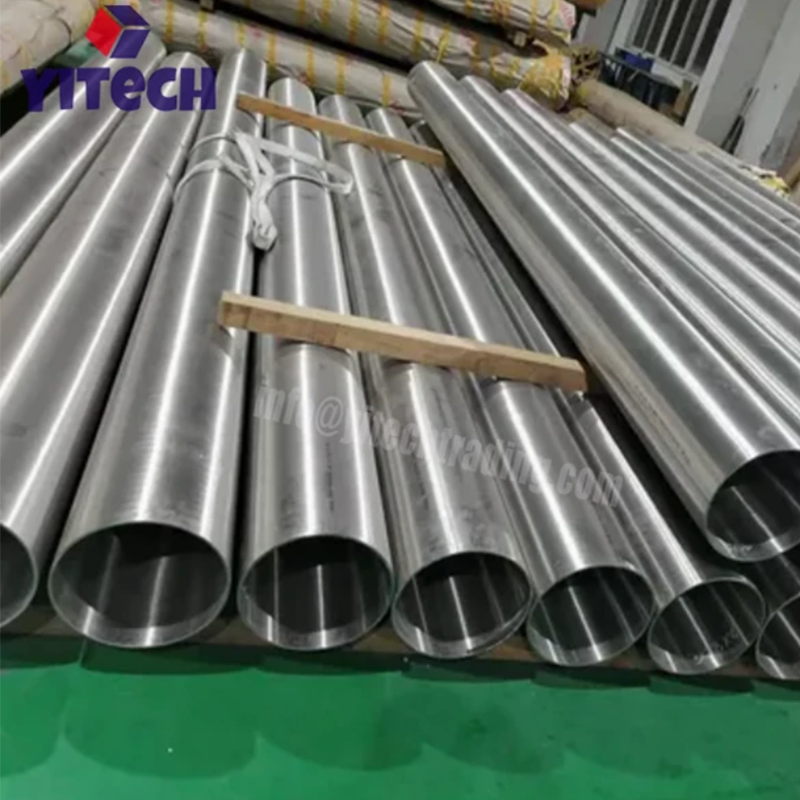
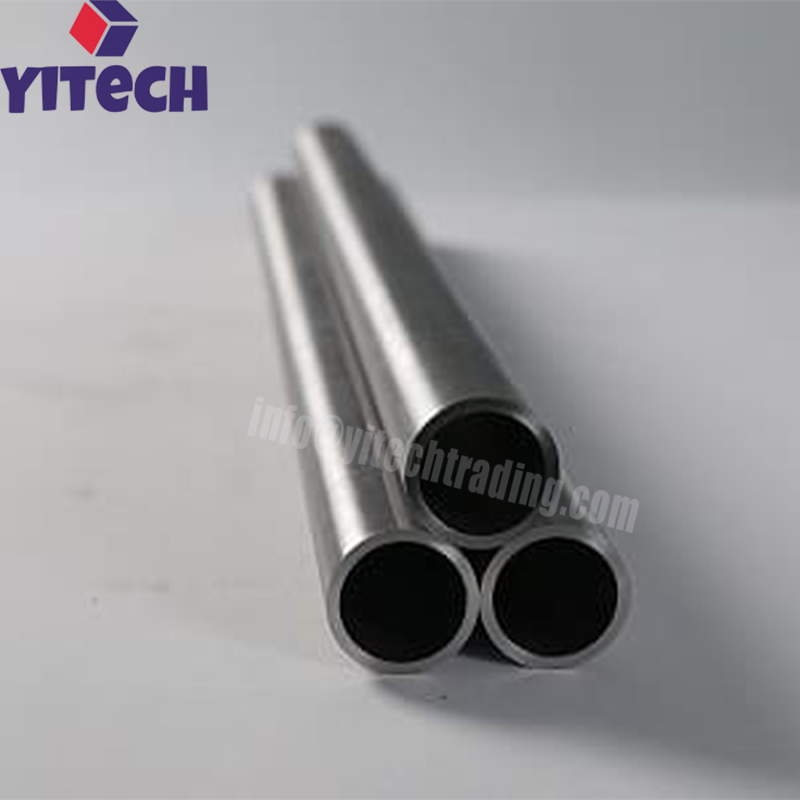
Customized Zirconium Alloy Pipe
- Outstanding corrosion resistance in hydrochloric acid, sulfuric acid, nitric acid, acetic acid, and strong alkalis
- Zr705 offers approximately twice the tensile strength of Zr702 — ideal for high-pressure chemical equipment
- Low neutron absorption cross-section for nuclear reactor applications
- Excellent high-temperature performance and dimensional stability under irradiation
- Seamless and welded construction available
- OD 6–219mm, wall thickness 0.5–15mm, length up to 6000mm (customizable)
- Surface finishes: pickled, polished, annealed
Description Of Customized Zirconium Alloy Pipe
Customized Zirconium Alloy Pipe refers to zirconium and zirconium alloy tubular products manufactured to customer-specific drawings, specifications, and dimensions. Zirconium is a reactive metal with a high affinity for oxygen, forming a protective oxide film that enables exceptional corrosion resistance in aggressive chemical environments. These pipes are widely used in nuclear energy, chemical processing, aerospace, marine engineering, and medical applications.
The manufacturing process begins with high-purity zirconium sponge or alloying elements, followed by vacuum arc remelting (VAR) to produce ingots. The ingots are then hot extruded to form initial tube shapes, followed by multiple passes of cold pilgering or drawing to achieve final dimensions. Heat treatment (stress relief and recrystallization annealing) and surface treatment (pickling, polishing) are performed to meet the required mechanical properties and surface finish. Rigorous quality control includes dimensional checks, non-destructive testing (NDT), and mechanical testing.
Customized zirconium alloy pipes are available in three primary grades: Zr702 (R60702) — unalloyed zirconium with moderate strength and excellent corrosion resistance; Zr704 (R60704) — zirconium-tin alloy with improved strength; and Zr705 (R60705) — zirconium-niobium alloy with approximately twice the tensile strength of Zr702. Zircaloy-2 and Zircaloy-4 are also available for nuclear fuel cladding and core structural applications.
Zirconium alloy pipes offer a unique combination of properties: density of 6.51 g/cm³, melting point ≥1800°C, outstanding corrosion resistance in most organic and mineral acids, excellent corrosion resistance in strong alkalis, and a low neutron absorption cross-section. They are resistant to stress corrosion cracking and maintain dimensional stability under irradiation. Custom sizes, alloys, and surface finishes are available upon request.
Applications Of Customized Zirconium Alloy Pipe
Nuclear Energy: Fuel cladding tubes, pressure tubes in CANDU reactors, core structural components, and control rod guide tubes. Zirconium alloys are the standard material for nuclear fuel cladding due to their low neutron absorption cross-section and excellent corrosion resistance in high-temperature water.
Chemical Processing: Heat exchangers, condensers, coolers, piping systems, reaction vessels, pumps, valves, and column internals for aggressive chemicals including hydrochloric acid, sulfuric acid, nitric acid, acetic acid, formic acid, and methyl methacrylate production.
Aerospace: Structural components in aircraft engines, hydraulic system tubing, and fasteners and fittings for space vehicles.
Marine Applications: Seawater-cooled condensers, desalination plant components, and offshore oil and gas equipment.
Medical Industry: Implantable devices and radiation therapy equipment components.
Urea and Fertilizer Production: Zirconium tubing is resistant in most organic acids and mineral acids, making it ideal for heat exchangers in urea, acetic acid, and nitric acid production.
Usage Precautions and Limitations Of Customized Zirconium Alloy Pipe
Hydrofluoric Acid Resistance: Zirconium is NOT resistant to hydrofluoric acid (HF) and will be rapidly attacked even at low concentrations. Avoid contact with HF-containing media.
Ferric Chloride and Cupric Chloride Environments: In sulfuric acid containing FeCl₃ or CuCl₂, Zr702 and Zr704 offer better corrosion resistance than Zr705 and Zr706. Select the grade based on the specific chemical environment.
Welding Considerations: Zirconium must be welded in an inert gas atmosphere (argon) to prevent contamination and embrittlement. TIG and electron beam welding are recommended. Clean surfaces thoroughly before welding.
Machining Considerations: Zirconium has a tendency to gall and work-harden. Use sharp carbide tooling, adequate cooling, and low cutting speeds. Avoid excessive feed rates.
Handling and Storage: Handle with care to avoid surface contamination or mechanical damage. Store in a dry, clean environment. Avoid contact with dissimilar metals that could cause galvanic corrosion.
Cleaning: Clean with a soft cloth or mild solvent. Avoid abrasive cleaners that could damage the protective oxide film.
Specifications Of Customized Zirconium Alloy Pipe
| Parameter | Specification |
|---|---|
| Material | Zirconium and zirconium alloy |
| Grades | Zr702 (R60702), Zr704 (R60704), Zr705 (R60705), Zircaloy-2, Zircaloy-4 |
| Standards | ASTM B523, ASTM B658, ASTM B353, GB/T 26283, GB/T 44327 |
| Density | 6.51 g/cm³ |
| Melting Point | ≥1800°C |
| Outer Diameter (OD) | 6 – 219 mm (customizable) |
| Wall Thickness (WT) | 0.5 – 15 mm (customizable) |
| Length | Up to 6000 mm (customizable) |
| Construction | Seamless / Welded |
| Surface Finish | Pickled, Polished, Annealed |