

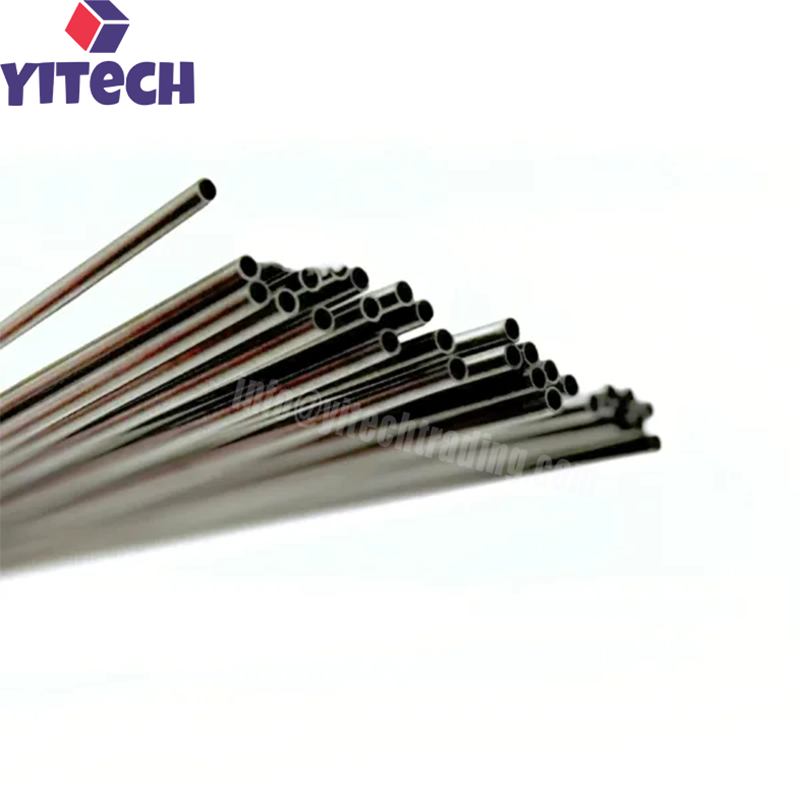
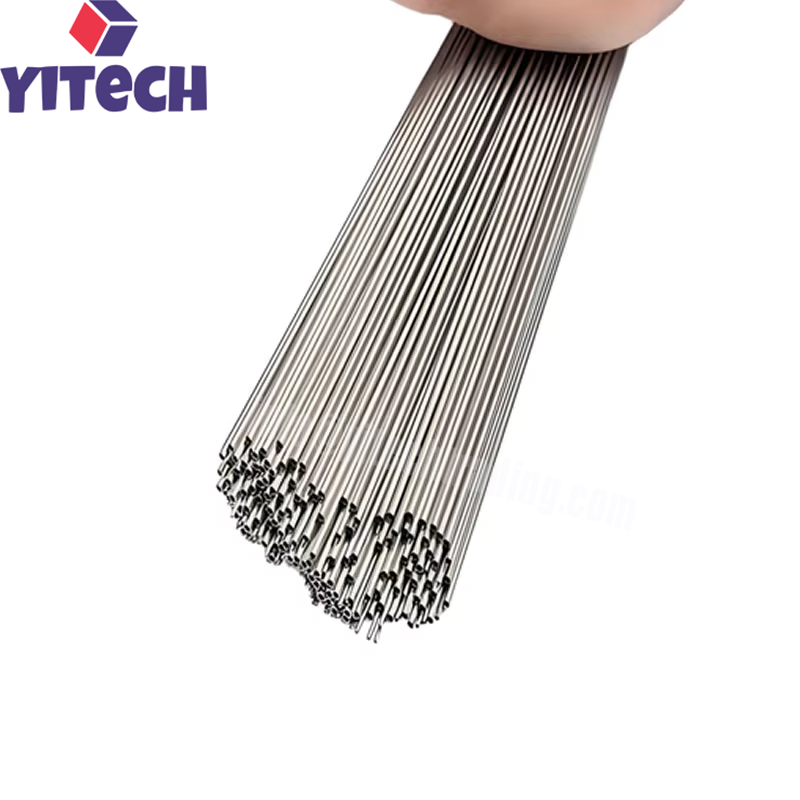
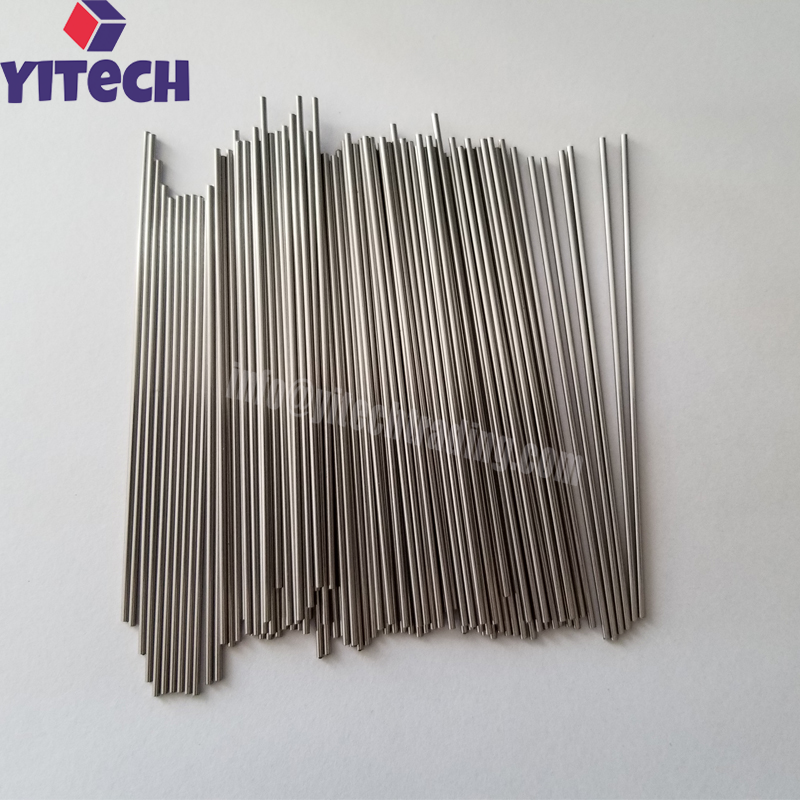
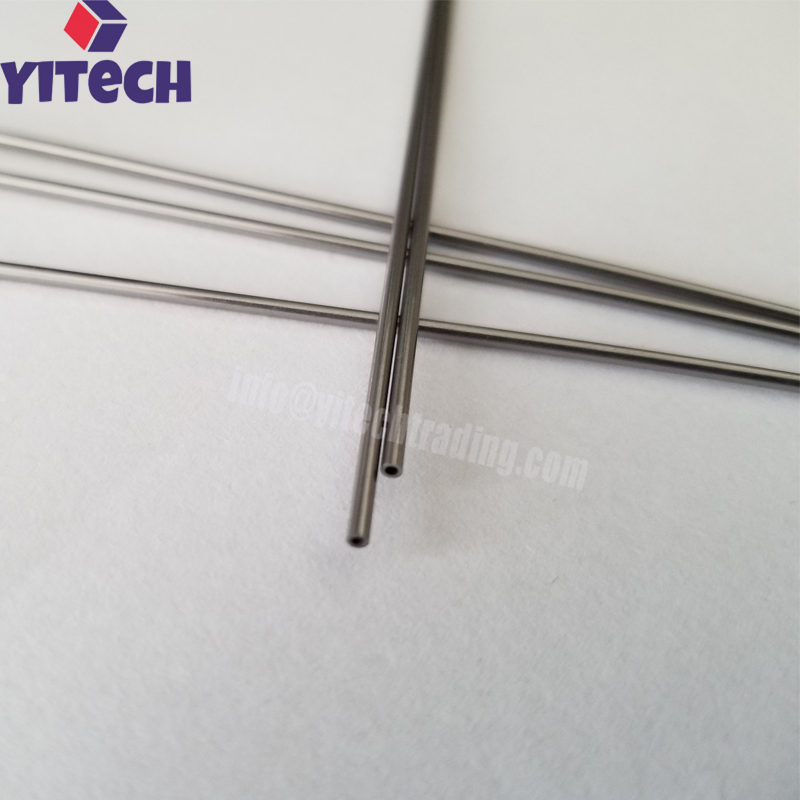
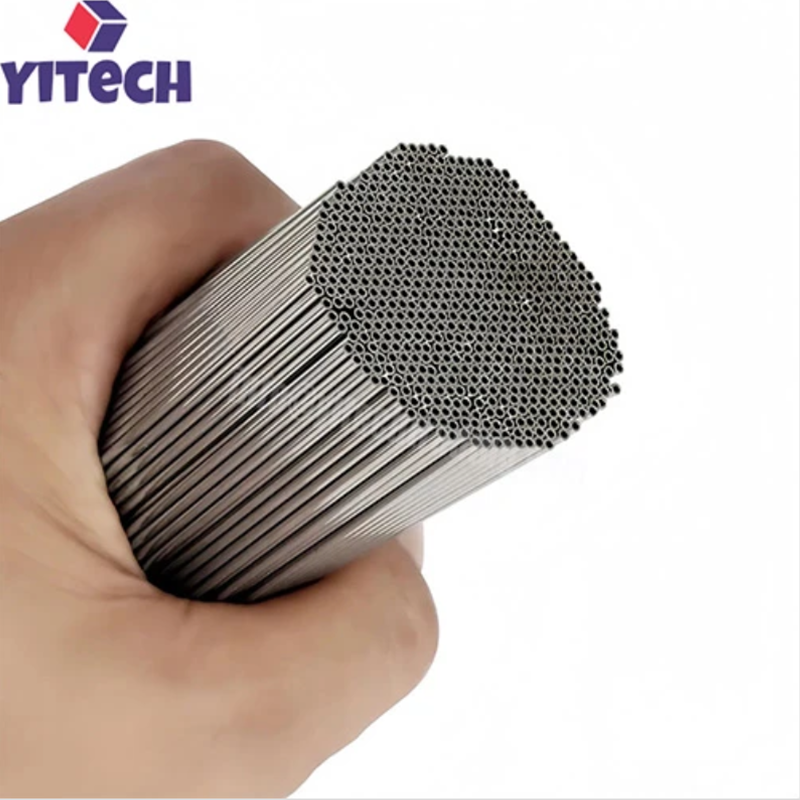
Thin Wall Thickness Capillary Molybdenum Tube
- High purity Mo ≥ 99.95% (Mo1 grade) for minimal contamination in critical applications
- Ultra-thin wall thickness from 0.05mm for capillary and precision tube applications
- Outer diameter range 0.2–10mm with tight tolerances
- Melting point 2610°C–2620°C for high-temperature service up to 1800°C in vacuum/inert gas
- Excellent thermal conductivity (~138 W/m·K) for rapid thermal response
- Low vapor pressure and low outgassing for vacuum and semiconductor applications
- Seamless or welded construction with smooth inner and outer surfaces
Description Of Thin Wall Thickness Capillary Molybdenum Tube
Thin Wall Thickness Capillary Molybdenum Tube is a precision-engineered tubular component manufactured from high-purity molybdenum (Mo1 grade, purity ≥99.95%) through powder metallurgy, extrusion, swaging, drawing, and precision machining processes. The “thin wall thickness” and “capillary” designations indicate that the tube has an ultra-thin wall (as low as 0.05mm) and a small outer diameter (typically 0.2–10mm), making it suitable for applications requiring precise fluid control, minimal thermal mass, and high-precision assembly.
Molybdenum offers a unique combination of properties that make it ideal for capillary and thin-wall tube applications. With a melting point of 2610°C–2620°C (the third-highest among all elements, after tungsten and tantalum), molybdenum tubes can withstand high temperatures without softening or deformation. Its density of 10.2 g/cm³, excellent thermal conductivity (~138 W/m·K), and low coefficient of thermal expansion (5.1×10⁻⁶/K) ensure rapid thermal response and dimensional stability. Molybdenum also has low vapor pressure and low outgassing, making it suitable for vacuum and semiconductor applications.
Thin wall capillary molybdenum tubes are manufactured using seamless or welded processes, followed by precision drawing and annealing to achieve the final dimensions and surface finish. The tubes can be supplied in bright, polished, or pickled surface conditions, with custom sizes and tolerances available upon request. TZM and MoLa alloys are available for applications requiring enhanced creep resistance or higher recrystallization temperatures.
These tubes are primarily used in thermocouple protection, semiconductor ion implantation, sapphire crystal growth furnaces, glass melting, medical capillary devices, and high-temperature furnace components.
Applications Of Thin Wall Thickness Capillary Molybdenum Tube
Thermocouple Protection Tubes: Thin wall capillary molybdenum tubes are used as protection sheaths for high-temperature thermocouples, particularly tungsten-rhenium thermocouples, in vacuum and inert gas atmospheres. The thin wall ensures rapid thermal response while protecting the thermocouple from contamination and mechanical damage.
Semiconductor and Electronics: Molybdenum capillary tubes are used as ion implantation components, gas injection tubes, and structural parts in semiconductor manufacturing equipment. The high purity and low outgassing ensure minimal contamination in wafer processing.
Sapphire Crystal Growth Furnaces: Molybdenum tubes are used in sapphire growth furnaces for feeding systems, support structures, and thermocouple protection. Their high-temperature stability and high purity ensure no contamination of the growing crystal.
Glass Melting and Quartz Processing: Molybdenum capillary tubes are used as electrodes, nozzles, and structural components in glass melting furnaces and quartz processing equipment.
Medical Devices: Molybdenum capillary tubes are used in medical needles, biopsy devices, and surgical instruments where high strength, corrosion resistance, and precise dimensions are required.
High-Temperature Furnaces: Used as heating element supports, thermocouple wells, and gas inlet tubes in vacuum furnaces, hydrogen furnaces, and sintering furnaces.
Aerospace and Defense: Molybdenum capillary tubes are used in rocket nozzles, aircraft engine sensors, and high-temperature instrumentation.
Precaution Of Thin Wall Thickness Capillary Molybdenum Tube
Oxidation at Elevated Temperatures: Molybdenum oxidizes rapidly at temperatures above 500°C in air, forming volatile molybdenum trioxide (MoO₃) which sublimes at temperatures above 538°C, causing accelerated metal loss. Thin wall capillary molybdenum tubes must be used exclusively in vacuum or inert gas atmospheres (argon, nitrogen, hydrogen) at elevated temperatures.
Mechanical Handling: Thin wall capillary tubes are fragile and susceptible to crushing, bending, or kinking. Handle with care during storage, transport, and installation. Avoid excessive bending or impact.
Embrittlement After Use: Molybdenum can become brittle after high-temperature exposure due to recrystallization and grain growth. Used tubes should not be subjected to mechanical stress or reworked.
Welding and Joining: Molybdenum can be welded using TIG or electron beam welding in inert gas atmospheres, but welding thin wall tubes requires specialized techniques due to molybdenum's brittleness. Proper joint design and stress relief are essential.
Cleaning: Clean tubes with a soft cloth or mild solvent. Avoid abrasive cleaners that could damage the surface or introduce contamination.
Specifications Of Thin Wall Thickness Capillary Molybdenum Tube
| Parameter | Specification |
|---|---|
| Material | Pure molybdenum (Mo1), TZM alloy, MoLa alloy |
| Purity | Mo ≥ 99.95% |
| Density | 10.2 g/cm³ |
| Melting Point | 2610°C – 2620°C |
| Boiling Point | ~5560°C |
| Operating Temperature | Up to 1800°C (vacuum/inert gas) |
| Thermal Conductivity | ~138 W/(m·K) at 20°C |
| Coefficient of Thermal Expansion | 5.1×10⁻⁶/K |
| Electrical Resistivity | ~5.7 µΩ·cm at 20°C |