

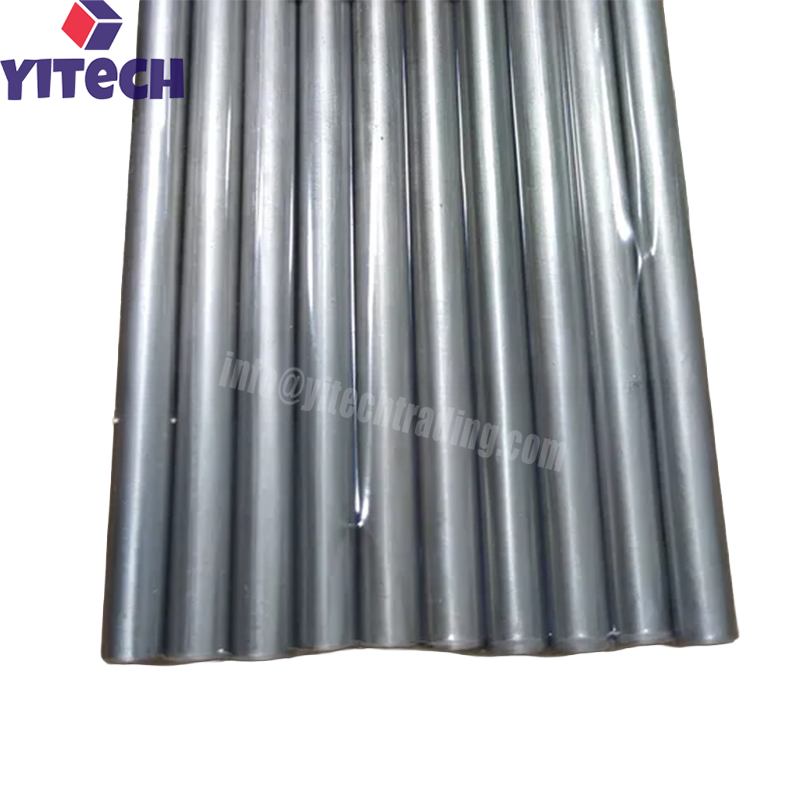
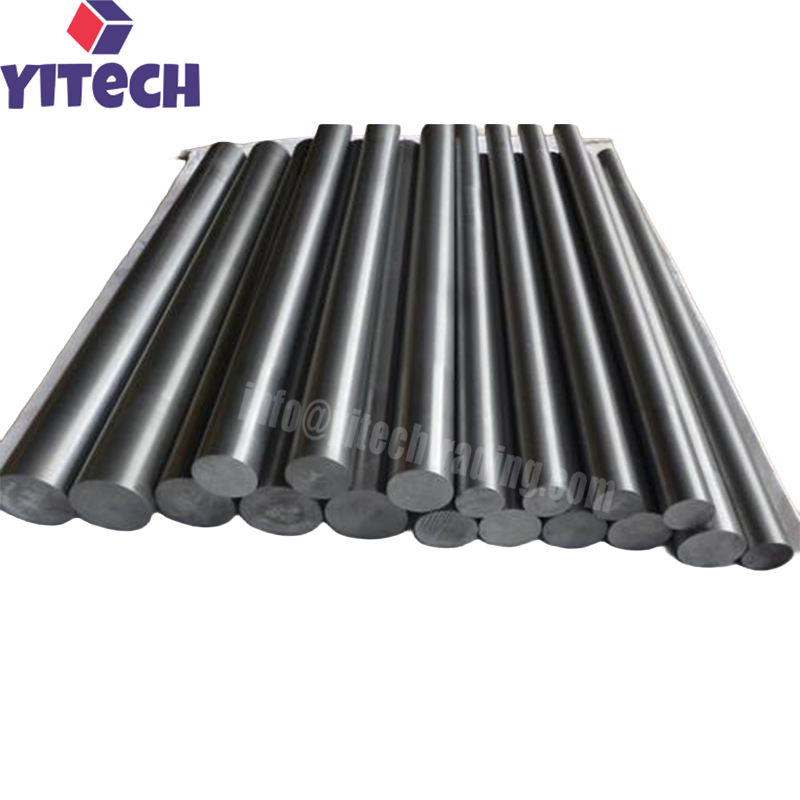
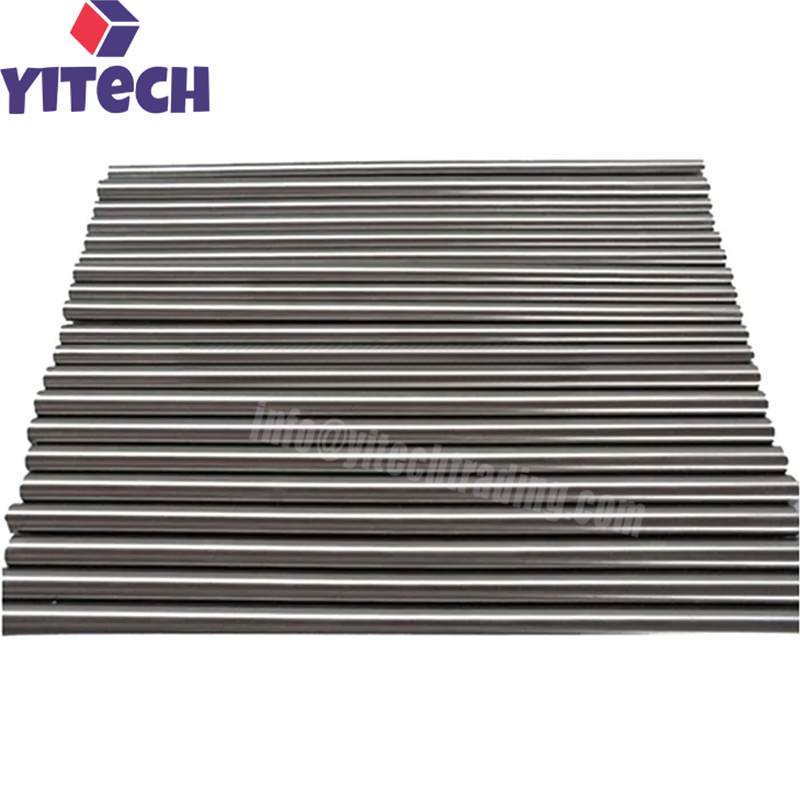
High Density Molybdenum Rods For Vacuum Furnaces
- High density ≥10.2 g/cm³ for maximum strength and minimal porosity
- High purity Mo ≥ 99.95% for minimal contamination in vacuum processes
- Melting point 2610°C–2620°C for continuous operation up to 1800°C
- Excellent high-temperature strength and creep resistance
- Low coefficient of thermal expansion (5.1×10⁻⁶/K) for dimensional stability
- Excellent thermal conductivity (~138 W/m·K) for uniform heating
- Available in Mo1, TZM, and MoLa grades for enhanced creep resistance
Description Of High Density Molybdenum Rods For Vacuum Furnaces
High Density Molybdenum Rods For Vacuum Furnaces are high-performance refractory metal components manufactured from high-purity molybdenum powder through powder metallurgy, high-temperature sintering, and subsequent thermo-mechanical processing such as forging, swaging, or rolling. The “high density” designation indicates that the rods achieve a density of at least 10.2 g/cm³ (typically 10.20–10.28 g/cm³), which is close to the theoretical density of molybdenum. This high density ensures maximum mechanical strength, minimal porosity, and excellent dimensional stability in high-temperature vacuum environments.
Vacuum furnaces operate under extreme conditions: high temperatures (up to 1800°C or higher), vacuum or inert gas atmospheres, and cyclic thermal loads. Conventional steel or stainless steel components would soften, oxidize, or creep under these conditions. Molybdenum rods are the material of choice for these applications due to their unique combination of properties. With a melting point of 2610°C–2620°C (the third-highest among all elements), molybdenum rods maintain their mechanical strength and structural integrity at operating temperatures up to 1800°C in vacuum or inert gas atmospheres. The material also offers excellent thermal conductivity, a low coefficient of thermal expansion, and good corrosion resistance against many molten metals.
High density molybdenum rods are widely used as heating elements, support rods, heat shields, hearth plates, and fixtures in vacuum furnaces, hydrogen furnaces, sintering furnaces, and sapphire crystal growth furnaces. They are available in Mo1 pure molybdenum, as well as TZM (Mo-0.5Ti-0.1Zr-0.02C) and MoLa (lanthanum-doped molybdenum) alloys for applications requiring enhanced creep resistance and higher recrystallization temperatures.
Features Of High Density Molybdenum Rods For Vacuum Furnaces
High Density: Density of at least 10.2 g/cm³ ensures maximum mechanical strength, minimal porosity, and excellent dimensional stability.
High Purity: Mo ≥ 99.95% (Mo1 grade) ensures minimal contamination in vacuum furnace and semiconductor applications.
High Melting Point: 2610°C–2620°C enables continuous operation at temperatures up to 1800°C in vacuum or inert gas atmospheres.
Excellent High-Temperature Strength: Molybdenum rods maintain high tensile strength and creep resistance at elevated temperatures, ensuring structural integrity under sustained thermal loads.
Low Coefficient of Thermal Expansion: With a coefficient of thermal expansion of 5.1×10⁻⁶/K, molybdenum rods exhibit excellent dimensional stability under thermal cycling.
Excellent Thermal Conductivity: Thermal conductivity of approximately 138 W/(m·K) at 20°C ensures uniform heating and efficient heat transfer.
Good Corrosion Resistance: Molybdenum resists corrosion from most chemical media and offers excellent resistance to molten glass and many molten metals.
Available in Multiple Grades: Available in Mo1, TZM, and MoLa alloys to suit different high-temperature and creep-resistance requirements.
Customizable Dimensions: Available in diameters from 3mm to 150mm and lengths up to 1500mm, with custom sizes available upon request.
Specifications Of High Density Molybdenum Rods For Vacuum Furnaces
| Parameter | Specification |
|---|---|
| Material | Pure molybdenum (Mo1), TZM alloy, MoLa alloy |
| Purity | Mo ≥ 99.95% |
| Density | ≥ 10.2 g/cm³ (typical 10.20–10.28 g/cm³) |
| Melting Point | 2610°C – 2620°C |
| Boiling Point | ~5560°C |
| Operating Temperature | Up to 1800°C (vacuum/inert gas) |
| Thermal Conductivity | ~138 W/(m·K) at 20°C |
| Coefficient of Thermal Expansion | 5.1×10⁻⁶/K |
| Electrical Resistivity | ~5.7 µΩ·cm at 20°C |
| Tensile Strength | 485 – 690 MPa (depending on condition) |
| Yield Strength | 415 – 550 MPa (depending on condition) |
| Hardness (Vickers) | 200 – 250 kgf/mm² |
| Elastic Modulus | ~325 GPa |
| Diameter Range | 3 – 150 mm (customizable) |
| Length | Up to 1500 mm (customizable) |
| Diameter Tolerance | ±0.05 mm (<10 mm), ±0.1 mm (>10 mm) |
| Straightness | ≤0.5 mm/m (standard); ≤0.2 mm/m (high-precision) |
| Surface Finish | Black, ground, polished |
| Standard Compliance | ASTM B387, GB/T 4188-2017 |