

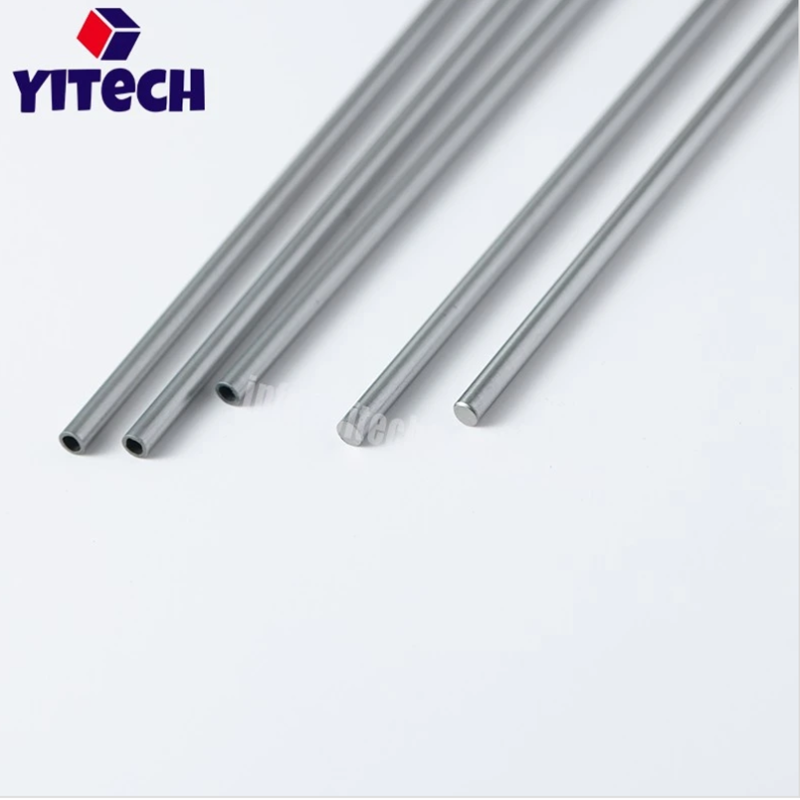
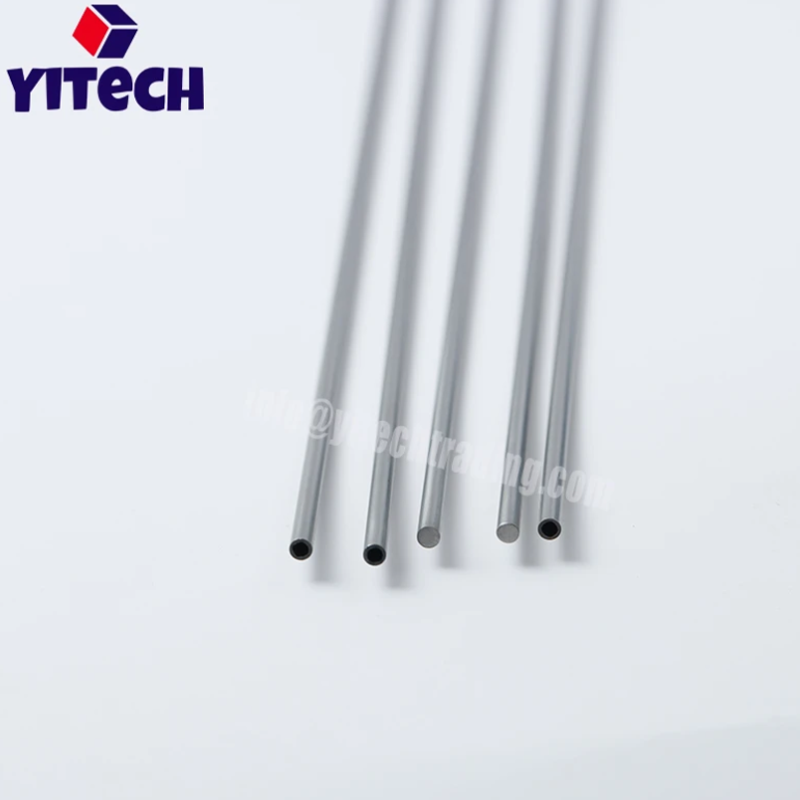
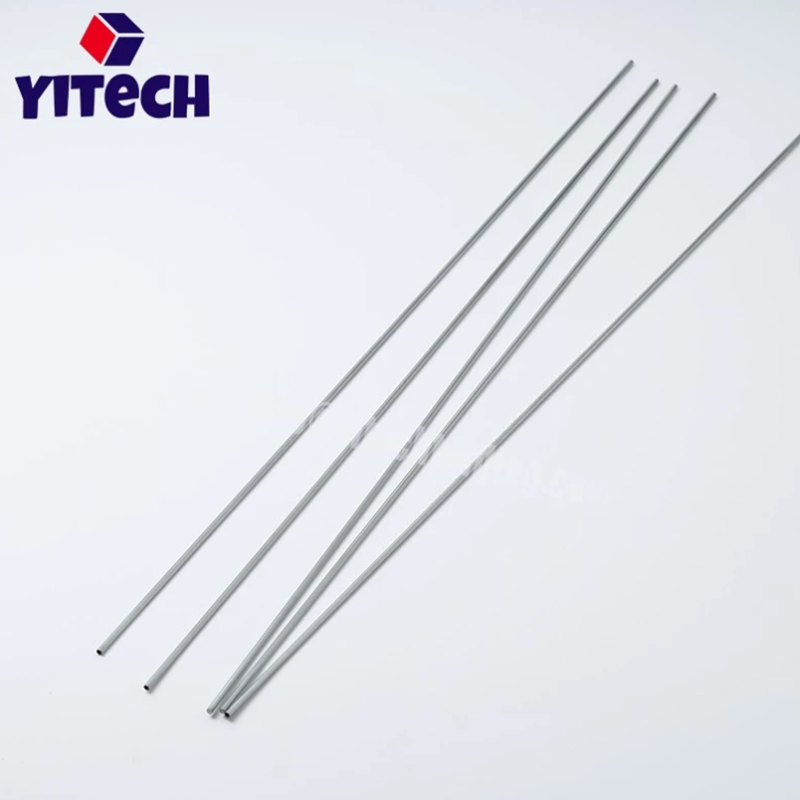
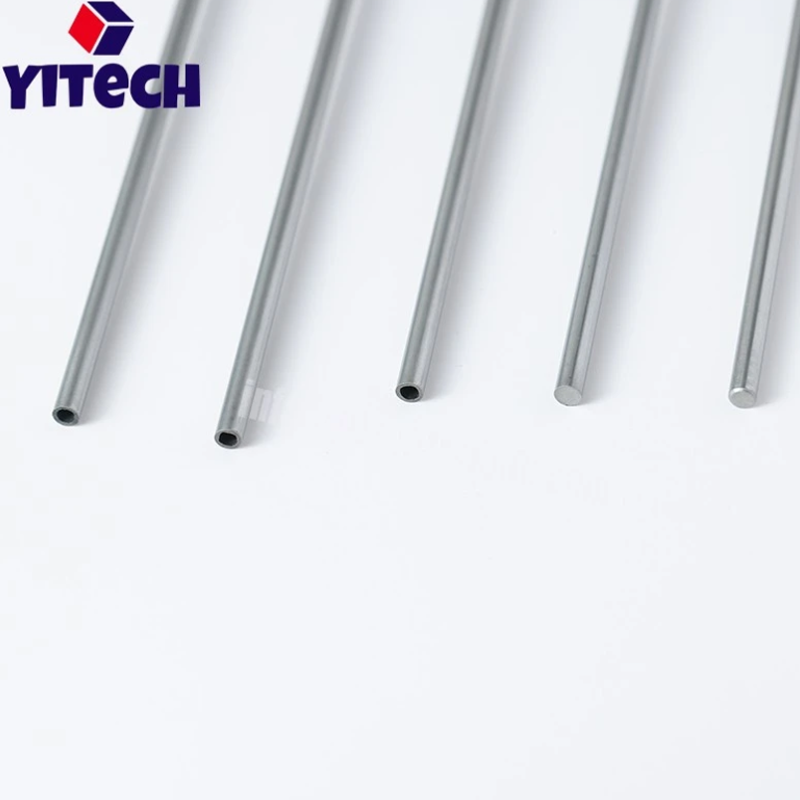
Precision OEC Molybdenum Tube
- High purity Mo ≥ 99.95% (Mo1 grade) for minimal contamination
- One-end closed (OEC) design for precise fluid control and contamination prevention
- Withstands temperatures up to 1800°C without deformation
- Density 10.2 g/cm³ with rapid thermal conductivity and minimal expansion
- Ultra-light wall thickness available (≥0.5mm)
- Precision machining with tight dimensional tolerances
- Ideal for semiconductor, aerospace, nuclear, and high-temperature furnace applications
- Custom sizes and MoLa/TZM alloy options available
Description Of Precision OEC Molybdenum Tube
Precision OEC Molybdenum Tube is a high-performance, one-end-closed tubular component manufactured from high-purity molybdenum (Mo1 grade, purity ≥99.95%) through advanced powder metallurgy, forging, machining, and sintering processes.
Molybdenum itself possesses a unique combination of properties that make it indispensable in extreme environments. With a melting point of 2623°C, molybdenum offers the third-highest melting point among all elements, surpassed only by tungsten and tantalum. Its density of 10.2 g/cm³, rapid thermal conductivity, and low coefficient of thermal expansion ensure excellent dimensional stability under thermal cycling. The material also exhibits excellent corrosion resistance and maintains high mechanical strength at elevated temperatures.
The one-end closed design provides significant functional advantages. In thermocouple protection tube applications, the closed end prevents molten metal or corrosive gases from entering the tube, protecting the temperature sensor while allowing accurate thermal measurement. In semiconductor processing equipment, the OEC configuration serves as a protective sleeve for electrodes or support structures, preventing contamination from external sources while maintaining electrical and thermal conductivity. As a micro-reaction vessel, the closed end enables precise control of small-volume chemical reactions under high-temperature conditions.
Precision OEC molybdenum tubes are manufactured using a seamless process that ensures zero leakage, making them suitable for critical applications where contamination and leakage cannot be tolerated. The manufacturing process involves forging, gun-drilling (for seamless tubes), machining, and precision sintering to achieve the final dimensions and surface finish. The tubes are available in Mo1 pure molybdenum, as well as TZM and MoLa (lanthanum-doped molybdenum) alloys for enhanced high-temperature creep resistance and recrystallization temperature.
Applications Of Precision OEC Molybdenum Tube
High-Temperature Industrial Equipment: Precision OEC molybdenum tubes are used as high-temperature furnace tubes, cracking tubes, and temperature measuring protection tubes in the petrochemical, metallurgical, and materials heat treatment industries. They require long-term stable operation under high pressure and high-temperature environments.
Semiconductor and Vacuum Equipment: Used as electrodes, support structures, or protective sleeves in electro-vacuum devices and semiconductor manufacturing equipment. The high purity, low volatility, and stable electrical properties of molybdenum make it ideal for these sensitive applications.
Precision Machinery and Measurement: Used to manufacture high-precision thermocouple protection tubes, sensor sleeves, and other components requiring precise tube dimensions and smooth surfaces to ensure measurement accuracy and reliability.、
Nuclear Energy: Molybdenum tubes are used as structural components in nuclear reactors and for neutron-absorbing applications due to molybdenum’s ability to absorb X-rays and neutrons.
Aerospace and Defense: Molybdenum tubes are used in rocket nozzles, aircraft engine components, and high-temperature structural parts where operating temperatures exceed 2000°C.
Glass and Quartz Melting: Used as mandrels, orifice plates, and crucibles for quartz tube production and quartz melting, benefiting from molybdenum’s corrosion resistance against molten glass and quartz.
Usage Precautions and Limitations Of Precision OEC Molybdenum Tube
Oxidation at Elevated Temperatures: Molybdenum oxidizes rapidly at temperatures above 500°C in air, forming volatile molybdenum trioxide (MoO₃) which sublimes at temperatures above 538°C, causing accelerated metal loss. Precision OEC molybdenum tubes should be used in vacuum or inert gas atmospheres (argon, nitrogen, hydrogen) at elevated temperatures. Protective coatings can be applied for oxidizing environments.
Machining Considerations: Molybdenum exhibits room-temperature brittleness and tends to chip during machining. Carbide tooling with sharp edges, adequate cooling, and appropriate cutting speeds are essential. Molybdenum is easier to machine than tungsten but requires careful handling.
Embrittlement After Use: Molybdenum can become brittle after high-temperature exposure due to recrystallization and grain growth. Used components should not be subjected to mechanical stress or reworked.
Handling and Storage: Molybdenum tubes should be handled with care to avoid surface contamination or mechanical damage. Store in a dry, clean environment to prevent surface oxidation.
Sealing Integrity: For OEC tubes used in fluid control or thermocouple protection, verify that the sealed end maintains integrity under operating pressures and temperatures. Inspect for cracks or leakage before installation.
Specifications Of Precision OEC Molybdenum Tube
| Parameter | Specification |
|---|---|
| Material | Pure molybdenum (Mo1), TZM alloy, MoLa alloy |
| Purity | Mo ≥ 99.95% |
| Density | 10.2 g/cm³ |
| Melting Point | 2623°C |
| Operating Temperature | Up to 1800°C (continuous); up to 2000°C (short-term) |
| Hardness (HRB) | 300 – 350 |
| Tensile Strength | 600 – 800 MPa |
| Wall Thickness | ≥ 0.5 mm (standard); 0.1–0.5 mm (capillary) |