

CNC Machining Titanium Bolts Nuts Fasteners
- Tight tolerances down to ±0.01mm and surface roughness Ra ≤0.8μm
- Excellent strength-to-weight ratio — 60% lighter than steel with comparable strength
- Outstanding corrosion resistance in seawater, chlorides, acids, and body fluids
- Biocompatible and nickel-free — ideal for medical implants and surgical instruments
- Available in metric, UNC, UNF, BSP, and custom thread forms
- Surface finishes: machined, polished, anodized, PVD coated, black oxide
- Full inspection: CMM, optical comparator, thread gauges, hardness tester
Description Of CNC Machining Titanium Bolts Nuts Fasteners
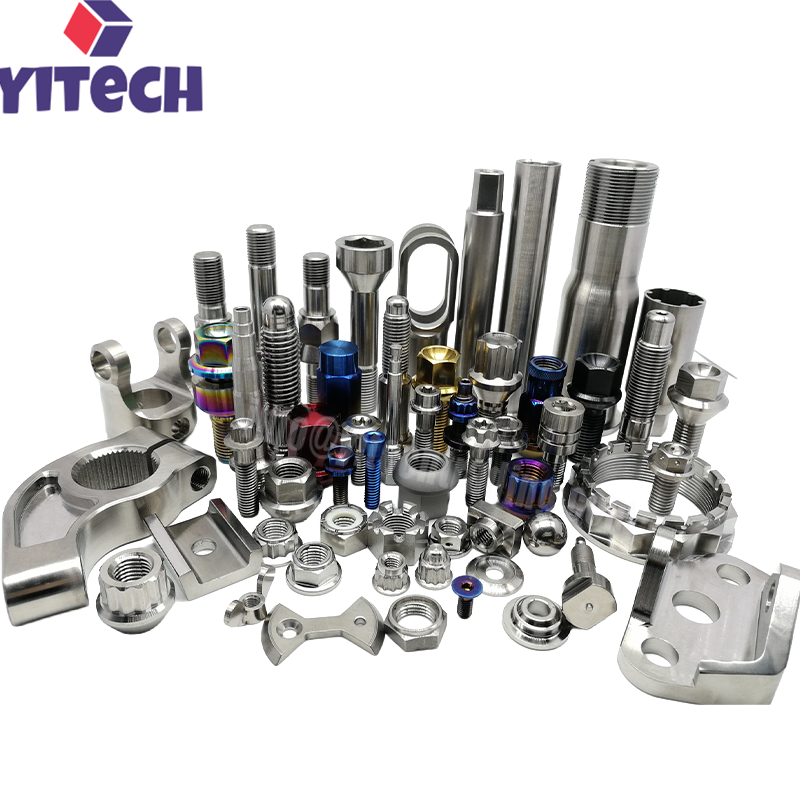
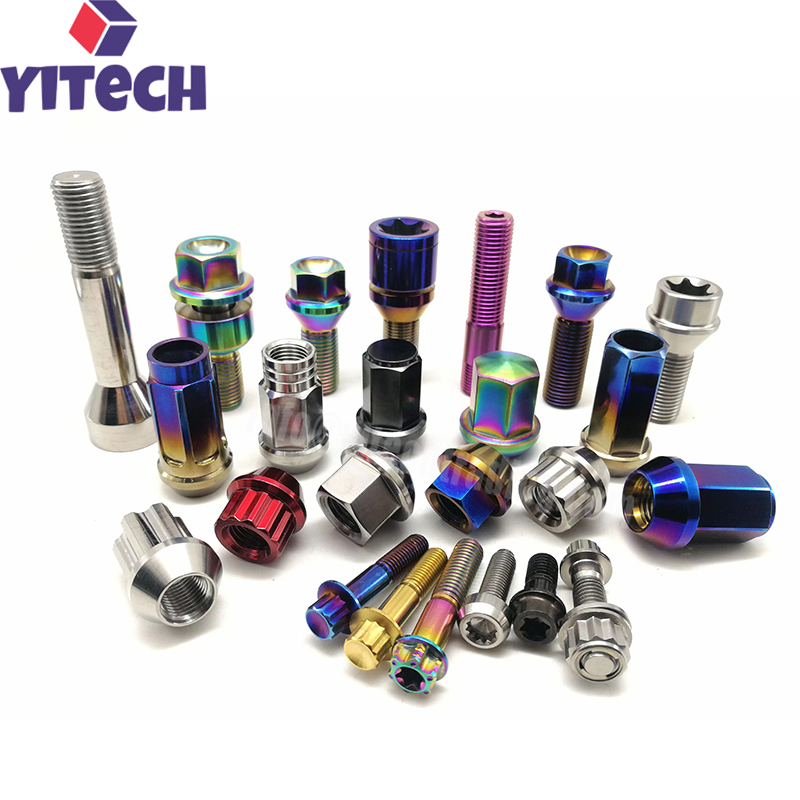
CNC Machining Titanium Bolts Nuts Fasteners refers to precision fasteners manufactured from titanium and titanium alloys using CNC machining technology. These fasteners include bolts, nuts, screws, studs, washers, and custom-designed fasteners produced to customer drawings and specifications. They are widely used in applications where high strength, low weight, and excellent corrosion resistance are critical.
The manufacturing process begins with high-quality titanium blanks (bar stock, forgings, or wire) in grades such as GR1, GR2, GR3, GR4, GR5 (Ti-6Al-4V), GR7, GR9, GR12, or Ti-6Al-4V ELI (Grade 23). CNC turning, milling, and thread cutting are used to achieve precise dimensions, thread profiles, and head geometries. Tight tolerances down to ±0.01mm and surface roughness Ra ≤0.8μm are achievable. Fasteners can be supplied in metric, UNC, UNF, BSP, or custom thread forms, with a variety of head styles including hex, socket head, button head, flat head, and custom designs.
Titanium fasteners offer a unique combination of properties: density of approximately 4.5 g/cm³ (about 60% lighter than steel), high tensile strength up to 1,100 MPa, excellent corrosion resistance in seawater, chlorides, acids, and body fluids, and biocompatibility for medical applications. They are non-magnetic and can be anodized or coated for color coding and additional protection.
Features Of CNC Machining Titanium Bolts Nuts Fasteners
High-Precision CNC Machining: Tight tolerances down to ±0.01mm, smooth surface finish Ra ≤0.8μm, and consistent thread quality.
Excellent Strength-to-Weight Ratio: Density ~4.5 g/cm³ — 60% lighter than steel with comparable or higher strength.
Outstanding Corrosion Resistance: Resists seawater, chlorides, acids, alkalis, and body fluids.
Biocompatible and Non-Toxic: Ideal for medical implants and surgical instruments. Nickel-free.
Non-Magnetic: Suitable for MRI-compatible devices and electronic equipment.
Multiple Grades Available: GR1, GR2, GR3, GR4, GR5 (Ti-6Al-4V), GR7, GR9, GR12, Ti-6Al-4V ELI (Grade 23).
Wide Range of Fastener Types: Bolts, nuts, screws, studs, washers, and custom shapes.
Thread Forms: Metric, UNC, UNF, BSP, BSPT, and custom threads.
Surface Finishes: Machined, polished, anodized, PVD coated, black oxide, and more.
Full Inspection: CMM, optical comparator, thread gauges, hardness tester, and surface roughness tester.
Usage Precautions and Limitations Of CNC Machining Titanium Bolts Nuts Fasteners
Proper Installation: Titanium fasteners must be installed using correct torque specifications and proper tools. Avoid over-tightening, which can cause thread stripping or fastener fracture.
Galling Prevention: Titanium has a tendency to gall (cold weld) during threading and assembly. Use anti-seize lubricants or coatings, and avoid high-speed assembly.
Galvanic Corrosion: Titanium is a noble metal and can cause galvanic corrosion when in contact with less noble metals (such as aluminum, zinc, or carbon steel) in the presence of an electrolyte. Provide insulation or isolation at dissimilar metal interfaces.
Hydrogen Embrittlement: Avoid exposure to hydrogen-containing environments at high temperatures, as titanium can absorb hydrogen and become brittle.
Temperature Limitations: Operating temperature should not exceed 600°C (depending on grade). At higher temperatures, titanium may react with oxygen, nitrogen, and hydrogen.
Cleaning: Clean with a soft cloth or mild solvent. Avoid abrasive cleaners that could damage the surface or introduce contamination.
Handling and Storage: Handle with care to avoid surface contamination or mechanical damage. Store in a dry, clean environment.
Specifications Of CNC Machining Titanium Bolts Nuts Fasteners
| Parameter | Specification |
|---|---|
| Material | Titanium and titanium alloy |
| Grades | GR1, GR2, GR3, GR4, GR5 (Ti-6Al-4V), GR7, GR9, GR12, Ti-6Al-4V ELI (Grade 23) |
| Machining Process | CNC turning, milling, thread cutting, drilling |
| Tolerance | ±0.01 mm (standard); ±0.005 mm (high-precision) |
| Surface Roughness | Ra ≤0.8μm (machined); Ra ≤0.2μm (polished) |
| Thread Forms | Metric, UNC, UNF, BSP, BSPT, custom |
| Head Styles | Hex, socket head, button head, flat head, custom |
| Fastener Types | Bolts, nuts, screws, studs, washers, custom |
| Size Range | M2 – M36; 1/8" – 1-1/2" (custom sizes available) |
| Density | 4.51 g/cm³ (pure Ti); 4.43 g/cm³ (Ti-6Al-4V) |
| Tensile Strength | 240 – 1,100 MPa (depending on grade) |
| Yield Strength | 170 – 1,000 MPa (depending on grade) |